
Across this series, we’ve named the gap, sized it, and mapped who sits inside it. 76% of cardholders say rewards drive their card choice. 34% act on it at checkout.1 They want a program that delivers visible value without friction, not just a bigger rate. And beneath the aggregate numbers, four different cardholders are living four different versions of that gap — each needing a different fix.
This piece is about the fix itself. Not a new finding about why the gap exists, but the two-part mechanism that can help close it: a cardholder has to know there’s something worth doing, and then doing it has to be easy. Prompt and friction removal aren’t two separate initiatives. They’re one sequence, and many programs are missing at least one half of it.
Activation Is a Sequence, Not a Switch
It’s tempting to treat activation as something that either happens or doesn’t — a cardholder is engaged, or they’re not. The data describes something more specific: a sequence with two distinct failure points.
First, the cardholder has to know there’s a moment to act. Our survey found that 50.1% of cardholders want to be notified specifically when they’re eligible to redeem — the single largest communication preference in the study, ahead of new-offer alerts (41.6%) and close-to-earning updates (36.4%). Cardholders aren’t asking for more messages. They’re asking for a different kind of message: you can act now instead of you’re getting closer.1
Second, once they know, acting has to take almost nothing. 51.2% of cardholders say redemption should take only a few clicks; another 24.2% say it should require no action at all. Combined, 75% of cardholders have set the bar at a few clicks maximum — or zero.1
A program can get either half right and still fail the cardholder. Perfect timing on a notification that leads to a clunky, multi-step redemption flow loses the cardholder at the friction point. A low-effort redemption experience that never gets surfaced to a cardholder who doesn’t know they’re eligible never gets used at all. The sequence only works end to end.
This isn’t a newly discovered pattern — it’s one that’s been visible in the data for years. A LendingTree survey of U.S. rewards credit cardholders found nearly seven in ten were sitting on unused cash back, points, or miles.2
Stat: 50.1% of cardholders want to be notified specifically when they’re eligible to redeem; 75% expect that redemption to take a few clicks or none.1
Implication: The gap between intent and action closes at two distinct points in the cardholder journey — the prompt and the action itself — not one.
Outcome: A program that strengthens only one half of the sequence can still lose cardholders at the other half, and the dashboard will read as a mystery instead of a diagnosis.
Why This Isn’t Last Month’s Argument About Friction
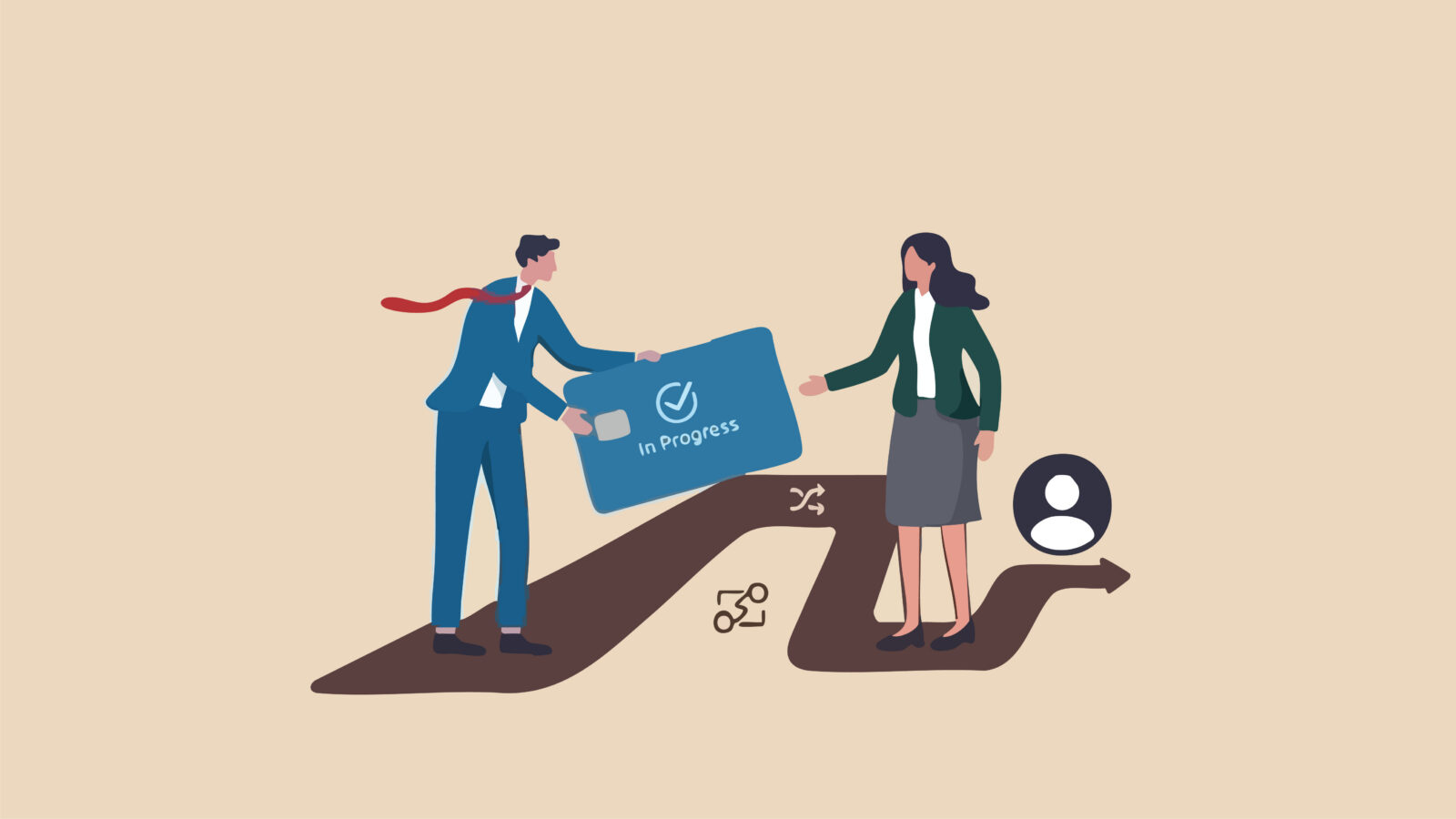
Readers of our piece on what cardholders actually want from rewards already know that friction undermines perceived value — that’s an established finding in this series, and we’re not re-making the case here. What’s different this time is the sequence itself: friction matters, specifically, as the second half of an activation mechanism that starts with a prompt. Fix the friction without fixing the prompt, and a cardholder who never knew they were eligible never reaches the frictionless experience waiting for them.
This is also where the four behavioral archetypes from our recent piece earn their keep. The Loyal Habitual — the cardholder who rated rewards highly at selection and then optimizes for almost nothing at checkout — is missing the prompt half of the sequence. They have no reason to think about the program until something tells them to. The Cash-Back Pragmatist, by contrast, already has intent and already acts — their gap is friction, not awareness. Treating both cardholders with the same intervention, whichever half you pick, will move one and do nothing for the other.
The Architecture the Data Prescribes
Channel preferences give the prompt half a specific build, not just a concept. Email leads at 53.2%, SMS follows at 45.5%, and mobile app push notifications trail at 32.0%. A coordinated email-plus-SMS sequence, triggered by eligibility rather than a calendar date, matches the channel mix cardholders say they prefer.1
McKinsey’s loyalty research reaches a version of the same conclusion from the program-design side: among the levers it identifies for activating dormant engagement, reminding cardholders of their point balances through targeted communications sits alongside reducing redemption friction3. The prompt isn’t a nice-to-have layered on top of a good program. It’s one of the two mechanisms that can help the program work.
On the friction side, the fix is less about adding anything and more about counting. Every additional step between cardholder is eligible and cardholder has redeemed is a step the data says most cardholders won’t tolerate. A redemption flow that requires logging into a separate rewards site, searching a catalog, and confirming a selection may be well-designed in isolation and still require more effort than many cardholders prefer.1
ampliFI’s Real-Time Rewards puts both halves of that sequence into practice: a timely prompt to redeem and a simple way for cardholders to use their points. Among Real-Time Rewards users — where redemption happens instantly, at the point of sale, instead of through a separate site and catalog — 80% were first-time redeemers: cardholders who had never acted on a reward before encountering a version of redemption with almost no steps between eligibility and value. Among cardholders who have redeemed through both experiences, Real-Time Rewards redeemers average 3.7 redemptions a year against 1.6 for a classic, catalog-based redemption experience — more than double the frequency, from the same cardholder base.4
What This Means for Your Program

Audit the sequence, not just the endpoints. Measuring enrollment and redemption tells you the before and after. It doesn’t tell you whether the cardholders in between received a prompt, hit friction, or both. A diagnostic pass through actual cardholder journeys — not just the funnel metrics — will usually surface which half of the sequence is broken for which cardholders.
Build the prompt before you rebuild the redemption flow. A beautifully frictionless redemption experience delivers no value to a cardholder who never finds out they’re eligible. If your program has invested in UX without an eligibility-triggered notification sitting in front of it, the UX investment is underperforming for a reason that has nothing to do with the UX.
Match the fix to the archetype, not the average. A program-wide “redeem now” campaign will read as a win in aggregate while doing almost nothing for the cardholders who needed the other half of the sequence. The Loyal Habitual needs the prompt first. The Pragmatist needs the frictionless flow first. Neither needed the other.
Closing this gap can help deliver the thing this series has returned to every month: dormant rewards intent becoming active engagement, and active engagement compounding into cardholder lifetime value — deeper relationships, longer tenure, and a program your institution can point to as a measurable growth driver, not a puzzle on a dashboard.
The full communication-preference and redemption-threshold data — channel by channel, archetype by archetype — is in The Activation Gap: The 2026 Cardholder Rewards Report. What does the sequence look like for your most dormant cardholders right now?
The full findings are in The Activation Gap: The 2026 Cardholder Rewards Report.Methodology, behavioral archetypes, generational insights, and the complete preference breakdown from our research with 1,000 cardholders. |
 |
See how ampliFI’s Real-Time Rewards can simplify redemption for your cardholders.
Sources:
1ampliFI Loyalty Solutions, The Activation Gap: What 1,000 Cardholders Told Us — The 2026 Cardholder Rewards Report (N = 1,000, fielded May–June 2026)
2LendingTree, “Nearly 7 in 10 Rewards Credit Cardholders Sitting on Unused Cash Back, Points or Miles” (2022)
3McKinsey & Company, “Next in Loyalty: Eight Levers to Turn Customers into Fans”
4ampliFI Loyalty Solutions, internal platform data (Real-Time Rewards vs. classic redemption behavior)